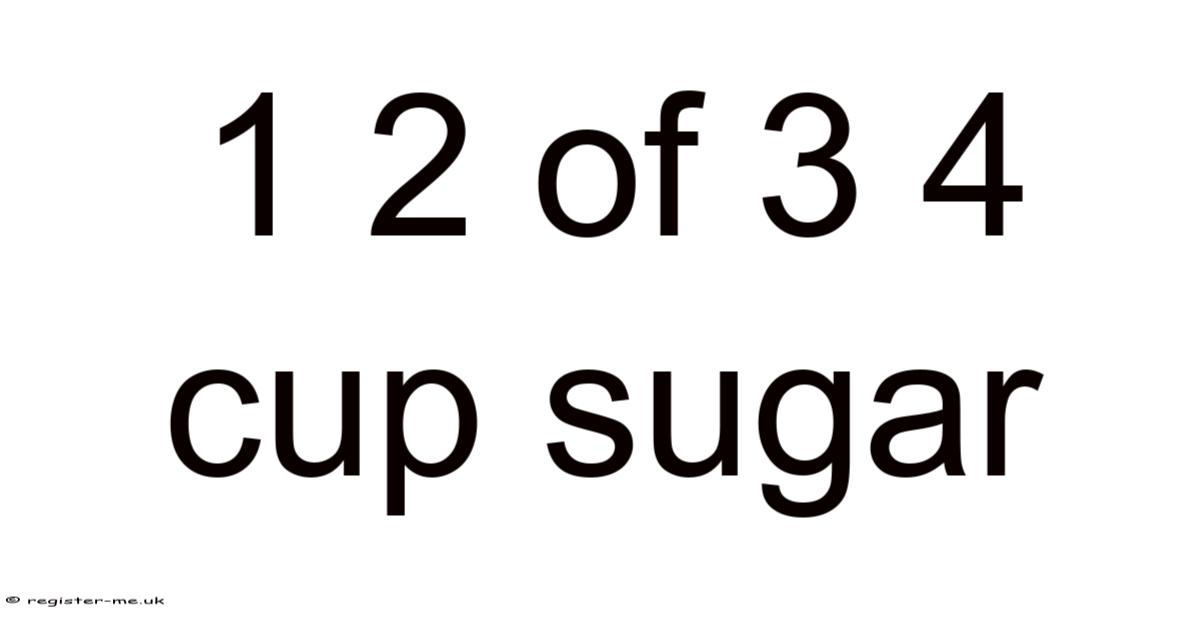
Understanding theRole of Sugar in Recipes: A Deep Dive into 1 1/2 and 3/4 Cup Measurements
When it comes to cooking and baking, precision is key, especially with ingredients like sugar that can dramatically alter the texture, flavor, and success of a dish. On top of that, these quantities are frequently used in recipes, from cakes and cookies to syrups and sauces. The phrase “1 2 of 3 4 cup sugar” might seem confusing at first glance, but it likely refers to two common measurements: 1 1/2 cups or 3/4 cup of sugar. This article will explore the significance of these measurements, how to use them effectively, and why accuracy matters in the kitchen Worth keeping that in mind. Less friction, more output..
Worth pausing on this one.
The Importance of Sugar Measurements in Baking and Cooking
Sugar is more than just a sweetener; it plays a multifaceted role in recipes. So it affects the structure, moisture, color, and shelf life of baked goods. To give you an idea, sugar contributes to browning through the Maillard reaction, adds tenderness to doughs, and retains moisture in cakes. Using the correct amount—whether 1 1/2 cups or 3/4 cup—is critical to achieving the desired outcome.
In baking, measurements are often precise because ingredients interact chemically. Too much sugar can make a cake dense or overly sweet, while too little might result in a bland or underdeveloped flavor. Similarly, in savory dishes, sugar can balance acidity or enhance umami, but even a small deviation in quantity can disrupt the harmony of flavors The details matter here..
Short version: it depends. Long version — keep reading Simple, but easy to overlook..
The confusion around “1 2 of 3 4 cup sugar” might stem from a miswritten recipe or a shorthand notation. Still, interpreting it as 1 1/2 cups or 3/4 cup allows us to address the core topic: understanding how to measure and use sugar effectively.
How to Measure Sugar Accurately: Tips for Success
Accurate measurement is the foundation of successful cooking and baking. Here’s how to ensure your 1 1/2 cups or 3/4 cup of sugar is precise:
- Use the Right Tools: Invest in a kitchen scale for the most accurate results. While volume measurements (cups) are common, weight measurements (grams or ounces) eliminate variability caused by how sugar is packed into a cup.
- Sift or Aerate Granulated Sugar: When measuring dry ingredients like granulated sugar, lightly aerating it with a fork or sifting it ensures it’s not compacted, which can lead to overpacking.
- Level the Scoop: For cup measurements, use a straight edge (like a knife) to level off the sugar in the measuring cup. Heaping sugar can add unnecessary volume.
- Differentiate Between Sugar Types: Powdered sugar, brown sugar, and granulated sugar have different densities. To give you an idea, 3/4 cup of powdered sugar weighs less than 3/4 cup of granulated sugar. Always specify the type of sugar in recipes.
By following these steps, you can confidently work with measurements like 1 1/2 cups or 3/4 cup of sugar, ensuring consistency in your recipes.
The Science Behind Sugar in Recipes
Understanding the science of sugar helps explain why specific quantities matter. In real terms, sugar acts as a humectant, retaining moisture in baked goods, and as a tenderizer, weakening gluten structures in doughs. Here's one way to look at it: in a recipe calling for 1 1/2 cups of sugar, the excess sweetness might be balanced by acidic ingredients like lemon juice or vinegar, creating a complex flavor profile Nothing fancy..
Real talk — this step gets skipped all the time Most people skip this — try not to..
In contrast, 3/4 cup of sugar might be used in a delicate dessert like meringue or a lighter cake, where over-sweetening could overpower subtle flavors. The type of sugar also matters: brown sugar adds moisture and a caramel-like flavor due to its molasses content, while powdered sugar is ideal for frostings because it dissolves easily Still holds up..
When a recipe specifies 1 2 of 3 4 cup sugar, it’s essential to clarify whether it refers to 1 1/2 cups or **3/4
