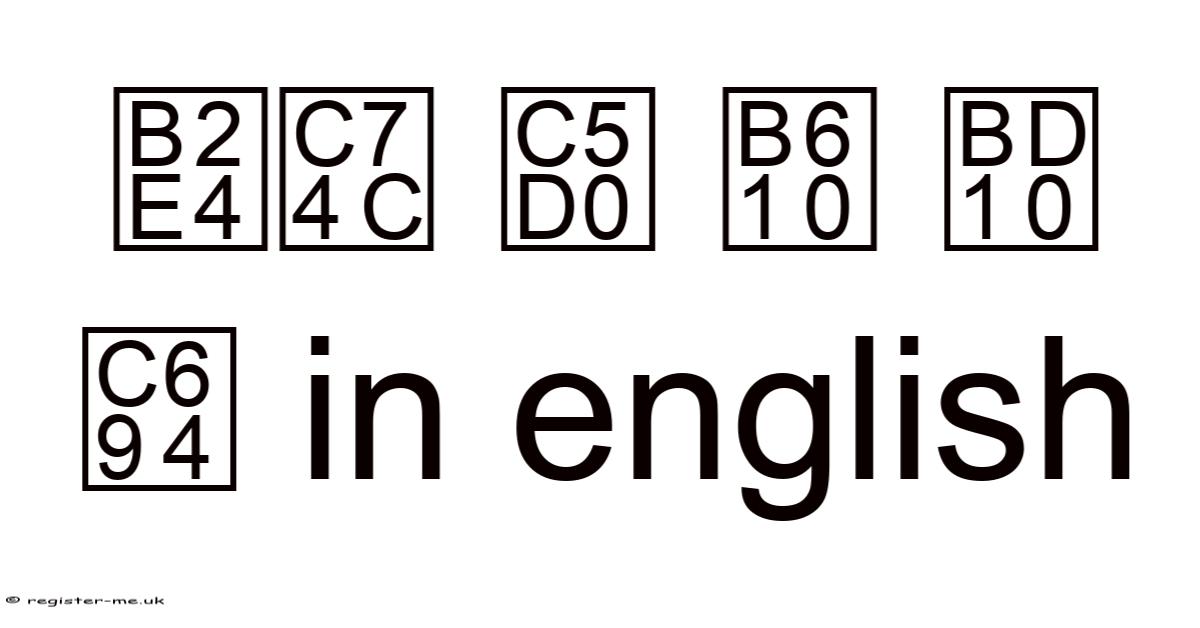
다음에 또 봐요: A Cultural Exploration of “See You Again” in Korean Language and Society
When a Korean speaker says 다음에 또 봐요 (da-eum-e tto bwa-yo), the phrase is more than a simple farewell. It carries warmth, expectation, and a subtle promise of continuity that reflects deep-rooted social values. This article digs into the linguistic construction, cultural significance, and practical usage of 다음에 또 봐요, providing learners and educators with a comprehensive understanding that can enrich language study and intercultural communication.
Real talk — this step gets skipped all the time.
Introduction
In everyday Korean interactions—whether at a café, a workplace, or a family gathering—다음에 또 봐요 appears frequently. It functions as a polite, friendly way to end a conversation while expressing hope for future contact. For non‑Korean speakers, the phrase may seem straightforward, but its nuances reveal much about Korean politeness levels, social bonding, and the Korean concept of jeong (정), a deep sense of affection and attachment.
1. Linguistic Breakdown
1.1. Morpheme Analysis
| Morpheme | Korean | English Equivalent | Function |
|---|---|---|---|
| 다음 (다음) | 다+음 | next | Noun meaning “next” (time or event) |
| 에 (에) | 에 | at / in | Locative particle indicating time or place |
| 또 (또) | 또 | again | Adverb meaning “again” |
| 봐요 (봐요) | 봐+요 | see | Verb “to see” in polite present form |
When combined, the phrase literally translates to “See you next time again.” Each component plays a role in conveying both temporal reference (next) and emotional continuity (again) That's the whole idea..
1.2. Politeness Levels
The ending -요 signals a polite, non‑honorific form suitable for acquaintances, colleagues, and people of similar or lower social status. In more formal settings, you might hear 다음에 또 뵙겠습니다 (da-eum-e tto boebgesseumnida), where 뵙다 is an honorific verb for “to see” and 겠습니다 adds a formal, respectful tone Less friction, more output..
2. Cultural Context
2.1. The Korean Value of Jeong
Jeong describes an emotional bond that develops over time and shared experiences. Saying 다음에 또 봐요 acknowledges this bond and reinforces it, implying that the relationship will continue to grow. It is a subtle way of saying, “I value our connection, and I look forward to more moments together.”
2.2. Social Harmony and Face‑Saving
Korean culture emphasizes harmony (조화) and face (얼굴). A simple farewell that includes the promise of a future meeting helps avoid abrupt endings that might leave the other party feeling neglected. It preserves mutual respect and maintains a positive social atmosphere.
2.3. Contextual Usage
| Situation | Appropriate Variation | Reason |
|---|---|---|
| Casual meetup with friends | 다음에 또 봐요 | Friendly, informal |
| Work meeting | 다음에 또 뵙겠습니다 | Formal, respectful |
| Family gathering | 다음에 또 봐요 | Warm, affectionate |
| Online chat | 다음에 또 봐요 | Casual, digital friendly |
3. Practical Application
3.1. Everyday Scenarios
-
Coffee Shop
Customer: “Thank you for the great service!”
Barista: “다음에 또 봐요!” (See you next time!) -
Business Email
Subject: “Follow‑up on our project”
Body: “We appreciate your time and look forward to our next meeting. 다음에 또 봐요 for a detailed discussion.”
Closing: “Best regards, [Name]” -
School Class
Teacher to Students: “Great job today. 다음에 또 봐요 for the next lesson.”
3.2. Variations to Match Tone
| Tone | Variation | Example |
|---|---|---|
| Informal | 다음에 또 보자 | Let’s meet next time. That said, |
| Polite | 다음에 또 뵙겠습니다 | I will see you again next time. |
| Casual | 다음에 또 봐 | See you next time. |
4. Common Mistakes and How to Avoid Them
-
Using the Wrong Honorific
Incorrect: “다음에 또 보겠습니다” (mixing informal 보다 with formal -겠습니다)
Correct: “다음에 또 뵙겠습니다” -
Forgetting the Temporal Marker
Incorrect: “다음 또 봐요”
Correct: “다음에 또 봐요” -
Over‑Politeness in Casual Settings
Incorrect: “다음에 또 뵙겠습니다” with a close friend.
Correct: “다음에 또 봐요”
5. FAQ
Q1: Can I use this phrase in written Korean?
A1: Yes, especially in informal emails, text messages, or social media posts. For formal letters, opt for the honorific version.
Q2: Is there a difference between “다음에 또 봐요” and “다음에 또 보자”?
A2: The former is polite, the latter is more casual and invites the other person to arrange a meeting.
Q3: How does this phrase compare to “See you later” in English?
A3: While both convey a future meeting, 다음에 또 봐요 explicitly emphasizes continuity and emotional connection, which is central to Korean interpersonal dynamics Simple as that..
Q4: Can I replace “다음에” with “다음번에”?
A4: Yes, 다음번에 (next time) is a synonym and can be used interchangeably No workaround needed..
6. Learning Tips for Non‑Native Speakers
-
Practice Contextual Usage
Pair the phrase with real-life scenarios. Role‑play with a language partner to internalize the natural flow. -
Listen to Native Speakers
Pay attention to how Koreans use the phrase in TV shows, podcasts, and conversations. Notice the intonation and pauses. -
Write Sentences
Draft emails or chat logs using both the polite and informal versions to reinforce grammatical structures. -
Memorize Key Words
Focus on 다음 (next) and 또 (again). These are the core elements that can be combined with various verbs.
Conclusion
다음에 또 봐요 is more than a polite farewell. It encapsulates Korean values of continuity, respect, and affection. By mastering this phrase, learners not only gain a useful linguistic tool but also gain insight into the cultural fabric that shapes Korean communication. Whether in casual chats, business meetings, or family gatherings, this simple expression can bridge gaps, build trust, and keep the conversation—and relationships—alive.
7. Extending the Phrase to Group Settings
When you’re parting from a group rather than a single individual, the same structure can be adapted with minor adjustments:
| Situation | Phrase | Nuance |
|---|---|---|
| Leaving a study group | 다음에 또 봐요, 여러분 | “See you again next time, everyone.” The addition of 여러분 adds a friendly, inclusive tone. On the flip side, |
| Closing a team meeting | 다음에 또 뵙겠습니다, 팀원 여러분 | Formal and respectful, suitable for senior‑to‑junior communication. |
| Saying goodbye at a family gathering | 다음에 또 봐요, 가족들 | Warm and familial; the informal verb 보다 keeps the atmosphere relaxed. |
These variations demonstrate how Korean speakers subtly shift honorific levels not only based on the listener’s age or status but also on the collective identity of the audience.
8. Cultural Etiquette Behind “다음에 또 봐요”
-
Reciprocity
The phrase implies an expectation of mutual effort. If you say 다음에 또 봐요, it’s courteous to follow through with a concrete plan—perhaps a text confirming the next meet‑up. Ignoring the implied promise can be perceived as inattentiveness. -
Timing Matters
In Korean culture, the exact timing of the next encounter can be vague (“next time”) or specific (“next Thursday”). When you intend a concrete date, it’s common to add it: 다음 주에 또 봐요 (Let’s see each other next week). This reduces ambiguity and shows genuine intent. -
Non‑Verbal Cues
The phrase is often accompanied by a slight bow, a gentle wave, or a handshake, depending on the context. The physical gesture reinforces the verbal commitment and signals sincerity.
9. Comparative Insight: “다음에 또 봐요” vs. Other Farewells
| Korean Farewell | Literal Translation | Typical Register | When to Use |
|---|---|---|---|
| 안녕히 가세요 | “Go peacefully” | Formal/polite | When the other person is leaving |
| 잘 가 | “Go well” | Casual | Among friends |
| 다음에 또 봐요 | “See you again next time” | Polite‑neutral | Any future‑oriented parting |
| 또 연락해요 | “Contact me again” | Polite‑neutral | When you expect follow‑up communication |
| 조만간 뵙겠습니다 | “I’ll see you soon (honorific)” | Very formal | Business or to elders |
Not the most exciting part, but easily the most useful.
Understanding these nuances helps learners choose the most appropriate farewell for each scenario, preventing accidental rudeness or over‑familiarity.
10. Practice Exercise: Fill‑in‑the‑Blank
Complete the sentences with the correct version of “다음에 또 봐요.” Choose the level of politeness that matches the context.
- (To a senior colleague) ______________________, 프로젝트 진행 상황을 공유하겠습니다.
- (To a close friend) ______________________, 이번 주말에 같이 영화 보자!
- (To a group of classmates) ______________________, 다음 시험 전에 스터디 모임을 잡아요.
Answers
- 다음에 또 뵙겠습니다 – respects seniority.
- 다음에 또 봐 – casual, friendly.
- 다음에 또 봐요 – polite but not overly formal, suitable for peers.
Final Thoughts
Mastering 다음에 또 봐요 is a micro‑lesson in Korean pragmatics: it teaches you how language, hierarchy, and relational intent intertwine. By paying attention to verb choice, honorifics, and accompanying non‑verbal signals, you’ll convey not just a simple goodbye, but a promise of continued connection—something that sits at the heart of Korean social etiquette Small thing, real impact..
Real talk — this step gets skipped all the time.
So the next time you part ways—whether it’s a quick coffee with a coworker, a night out with friends, or a family dinner—remember to close with 다음에 또 봐요 (or its appropriate variant). It’s a small phrase, but it carries the weight of respect, warmth, and the anticipation of future shared moments. Use it well, and you’ll find that doors—both linguistic and relational—remain open for the next encounter.
