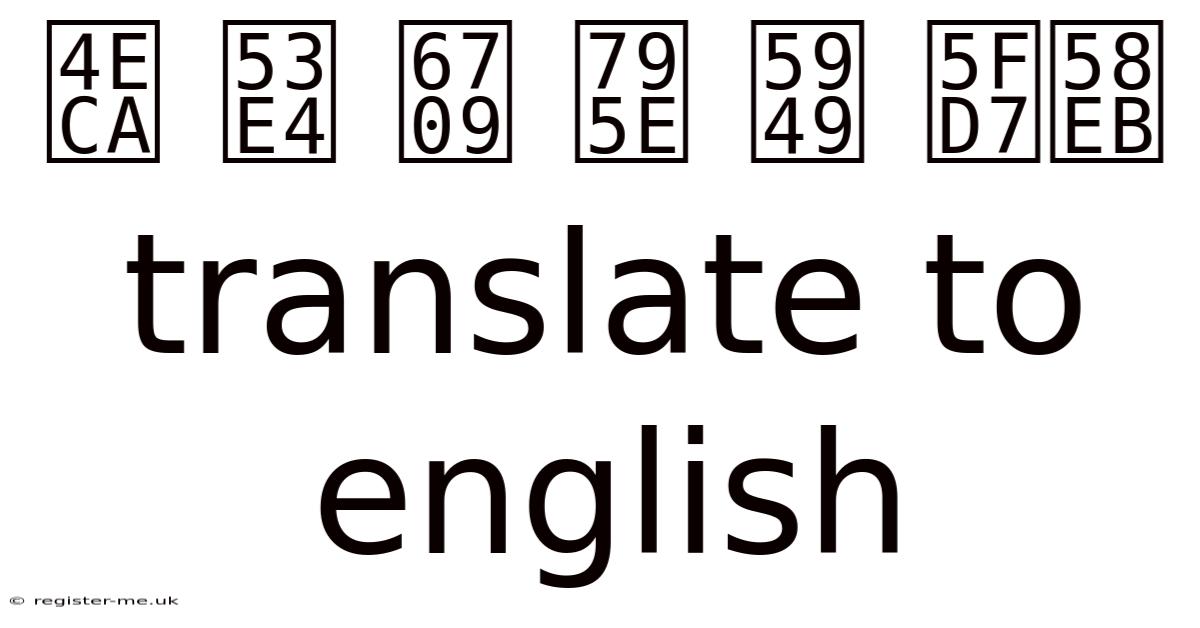
Introduction
The phrase “今 古 有 神 奉志士” is a compact yet powerful Chinese expression that evokes a sense of timeless dedication and heroic spirit. Translating it into English is not as simple as swapping characters for words; the phrase carries cultural, historical, and literary nuances that must be preserved to convey its full meaning. In this article we will break down each character, explore the phrase’s origins, discuss the challenges of translation, and provide several English renderings that capture its essence. By the end, you will understand why a literal translation falls short and how to choose the most appropriate English version for different contexts.
Literal Breakdown of the Characters
| Chinese | Pinyin | Literal meaning | Notes |
|---|---|---|---|
| 今 | jīn | now, present | Refers to the current era |
| 古 | gǔ | ancient, past | Contrasts with “今” to span all time |
| 有 | yǒu | there is, have | Introduces existence |
| 神 | shén | deity, god, spirit | Can also mean “miraculous” or “extraordinary” |
| 奉 | fèng | to serve, to revere, to dedicate oneself to | Implies a respectful, subordinate role |
| 志士 | zhìshì | “aspiring scholar‑warrior,” a person of high moral ambition | Historically used for loyal officials or patriotic heroes |
Putting the literal meanings together yields: “Now and ancient, there are gods serving aspiring heroes.” While this literal rendering is technically correct, it sounds stilted and fails to capture the phrase’s poetic rhythm and implied reverence.
Historical and Literary Context
The construction 今古有… (“now and ancient there are…”) is a classic rhetorical device found in Chinese classical literature, especially in historical records and moral essays. It signals that a particular phenomenon is not confined to a single era but is a recurring theme throughout Chinese civilization.
The term 神 in ancient Chinese texts often refers to extraordinary individuals whose deeds seem “divine” rather than literal deities. In the context of 奉志士, the phrase evokes the image of a 神 who serves or supports a 志士—a person of lofty ambition, moral integrity, and patriotic resolve.
The compound 志士 appears frequently in works such as Records of the Grand Historian (史记) and The Analects (论语) to describe scholars who devote themselves to a higher cause, whether it be loyalty to the state, moral rectitude, or the pursuit of justice Simple, but easy to overlook..
Thus, the full expression celebrates a timeless tradition: extraordinary forces (or individuals) align themselves with those who possess a noble will. It is both a statement of historical continuity and a moral exhortation.
Why a Straight‑Forward Translation Fails
- Loss of Poetic Rhythm – Chinese four‑character idioms (成语) are prized for their brevity and balance. Translating each character individually yields a clunky English sentence that lacks the original’s cadence.
- Cultural Connotations – The word 神 can mean “god,” “spirit,” or “miraculous.” Selecting “god” may imply a religious deity, which is not the intended nuance.
- Historical Weight – The phrase invokes a collective memory of past heroes. A literal translation does not convey the reverence embedded in the original.
- Ambiguity of “奉” – In Chinese, 奉 carries the sense of voluntary devotion rather than mere service. Rendering it simply as “serve” can strip away the voluntary, respectful aspect.
That's why, a successful translation must balance fidelity to meaning, preservation of literary elegance, and cultural sensitivity.
Recommended English Renderings
Below are several translations, each suited to a different purpose. Choose the one that best fits your audience and medium It's one of those things that adds up..
1. Formal Literary Translation
“Throughout the ages, divine forces have ever supported the valiant-hearted.”
Why it works:
- “Throughout the ages” captures 今古 (now and ancient).
- “Divine forces” conveys the elevated, almost supernatural quality of 神 without invoking specific religious imagery.
- “Valiant‑hearted” is a concise equivalent of 志士, emphasizing courage and moral resolve.
2. Academic or Historical Text
“From antiquity to the present, there have been celestial patrons who serve the aspirations of heroic scholars.”
Why it works:
- “Celestial patrons” mirrors the reverential tone of 神 serving 志士.
- The phrase “aspirations of heroic scholars” retains the intellectual and moral dimensions of 志士.
3. Inspirational Speech or Motto
“Across time, the divine stands beside those who dare to dream.”
Why it works:
- “Across time” is a smooth, modern rendering of 今古.
- “The divine stands beside” keeps the supportive relationship implied by 奉.
- “Those who dare to dream” broadens 志士 to a universal audience, making the motto inclusive.
4. Marketing Copy (e.g., for a heritage brand)
“Timeless spirit, ever‑watchful over the brave.”
Why it works:
- “Timeless spirit” condenses 今古有神 into a compact, memorable tagline.
- “Ever‑watchful over the brave” captures the protective, service‑oriented nuance of 奉志士.
Translating the Phrase in Practice
When you encounter 今古有神奉志士 in a text, follow these steps to decide which English version to use:
- Identify the surrounding genre – Is it a scholarly article, a poem, a speech, or a commercial slogan?
- Determine the target audience – Academic readers appreciate precise terminology; general readers prefer fluid, inspirational language.
- Select the appropriate tone – Formal, neutral, or motivational.
- Choose the translation that matches the tone – Refer to the four options above or adapt them.
- Check for readability – Read the English sentence aloud; it should flow naturally and retain the original’s gravitas.
Example Application
Original Chinese paragraph:
今古有神奉志士,忠义之心,永不泯灭。
A possible English rendering for a historical essay:
“From antiquity to the present, divine patrons have ever supported the valiant‑hearted; their loyalty and righteousness never fade.”
Notice how the translation blends the literal meaning with a smooth, scholarly cadence, preserving both the “神奉志士” relationship and the concluding moral statement It's one of those things that adds up. Less friction, more output..
Common Pitfalls and How to Avoid Them
| Pitfall | Why it Happens | Correct Approach |
|---|---|---|
| Translating 神 as “god” | Literal dictionary lookup | Use “divine,” “celestial,” or “spiritual” to keep the non‑specific, reverential tone |
| Rendering 志士 as “soldier” | Misinterpretation of “志” (will) as military | Choose “hero,” “valiant‑hearted,” or “heroic scholar” depending on context |
| Ignoring the 今古 contrast | Overlooking the temporal scope | Include “throughout the ages,” “across time,” or “from ancient to modern” |
| Using a wordy literal translation | Attempt to preserve every character | Aim for brevity while maintaining meaning; idiomatic English often requires condensation |
| Forgetting the 奉 nuance of voluntary devotion | Translating as simple “serve” | Use “support,” “stand beside,” or “serve voluntarily” to capture the respectful, voluntary aspect |
Frequently Asked Questions
Q1: Is there an existing English idiom that matches this phrase?
A: No single English idiom encapsulates the exact blend of timelessness, divine assistance, and heroic ambition. The closest might be “the hand of fate smiles upon the brave,” but it lacks the explicit “divine” and “across ages” components.
Q2: Can “神” be rendered as “miracle” instead of “divine”?
A: In some contexts, “miracle” works, especially when emphasizing extraordinary deeds. Still, “miracle” often implies a singular event, whereas “神” here suggests an ongoing, almost personified force.
Q3: Does the phrase have any religious connotations?
A: Not necessarily. In classical Chinese literature, 神 frequently denotes an elevated, awe‑inspiring quality rather than a specific deity. The phrase is more about moral elevation than religious worship And that's really what it comes down to. Still holds up..
Q4: How would you translate it for a children’s story?
A: “Long ago and today, magical helpers cheer on brave hearts.” This simplifies the language while retaining the core idea.
Q5: Should I keep the original Chinese characters alongside the translation?
A: For bilingual publications or academic works, it is helpful to present the original characters in parentheses after the English translation, e.g., “Throughout the ages, divine forces have ever supported the valiant‑hearted (今古有神奉志士).”
Conclusion
Translating “今古有神奉志士” is a rewarding exercise in balancing literal accuracy with cultural resonance. Whether you need a scholarly citation, an inspirational motto, or a poetic line, the key is to preserve the dual concepts of eternal divine support and unwavering human resolve. Now, by dissecting each character, understanding the historical backdrop, and selecting an English rendering that fits the intended tone, you can convey the phrase’s timeless reverence for heroic ambition. Use the suggested translations as a foundation, adapt them to your specific audience, and you’ll deliver a translation that feels both authentic and compelling.
