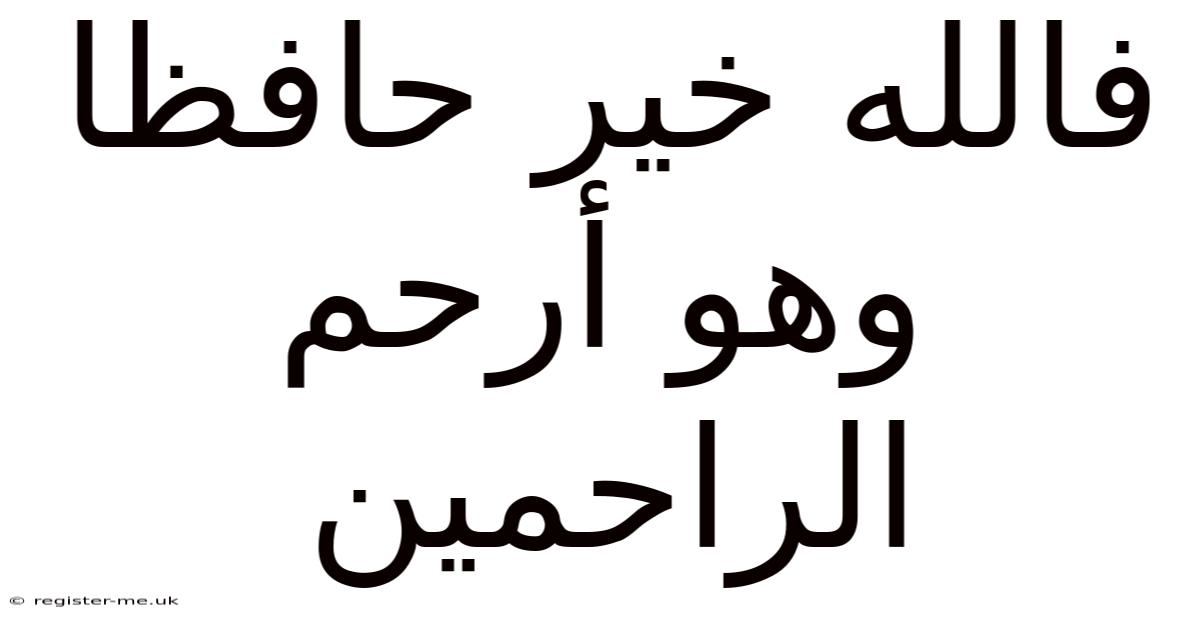
Understanding the profound meaning of "فالله خير حافظا وهو أرحم الراحمين" requires a deep dive into the spiritual and moral significance of this phrase. This statement carries immense weight in Islamic teachings, resonating with believers who seek guidance, comfort, and strength in their lives. In this article, we will explore the essence of this powerful declaration, its historical context, and its relevance in today’s world Simple, but easy to overlook..
The phrase "فالله خير حافظا" translates to "Allah is the Best Protector.It reminds us that no matter what challenges we face, Allah is always there to shield and protect us. " This part of the saying emphasizes the unwavering support and care that Allah provides to His followers. This concept is central to Islamic faith, reinforcing the belief in a divine protector who watches over every individual. Understanding this idea helps us cultivate a sense of security and trust in the face of uncertainty Most people skip this — try not to..
Next, we turn to "وهو أرحم الراحمين," which means "He is the Most Merciful Among the Merciful.Still, " This portion highlights the compassionate nature of Allah, emphasizing His unparalleled mercy. In a world that often feels overwhelming, this phrase serves as a powerful reminder of the boundless love and grace that Allah extends to all. It encourages believers to embrace humility and recognize the importance of seeking His forgiveness and guidance. This part of the saying is not just a statement of belief but a call to action, urging us to reflect on our actions and strive for greater compassion That's the part that actually makes a difference. Turns out it matters..
Together, these two parts of the phrase form a profound message of hope and reassurance. Allah’s protection and mercy are always within reach. They remind us that while life may bring trials and tribulations, we are never truly alone. This understanding is crucial for those navigating difficult times, as it provides a foundation of strength and peace.
To fully grasp the significance of this statement, Explore its historical roots — this one isn't optional. In Islamic tradition, the concept of divine protection is deeply embedded in the teachings of the Quran and the Hadith. Day to day, the Prophet Muhammad (peace be upon him) often emphasized the importance of seeking Allah’s help in every situation. That's why his teachings serve as a guide for believers, encouraging them to rely on divine support rather than relying solely on their own efforts. This historical context reinforces the idea that the phrase is not merely a poetic expression but a vital part of the Islamic faith.
Worth adding, the phrase "فالله خير حافظا" can be interpreted as a reflection of the interconnectedness of faith and protection. Think about it: this understanding fosters a deeper relationship with the divine, encouraging individuals to cultivate gratitude and humility. It suggests that when we acknowledge our dependence on Allah, we also recognize His role as our ultimate protector. By recognizing our vulnerability, we open ourselves to the comfort of knowing that we are cared for.
In addition to its spiritual significance, this saying also carries practical implications for daily life. When we internalize the message of divine protection, we become more resilient in the face of adversity. It inspires us to approach challenges with a positive mindset, knowing that we have a higher power supporting us. This perspective can be transformative, helping individuals to overcome fears and doubts with confidence.
The phrase also serves as a reminder of the importance of community and support. In times of hardship, the strength of faith can be amplified by the collective efforts of those around us. On the flip side, by embracing the idea that we are all in this together, we can find the courage to seek help and share our experiences with others. This communal aspect of the message strengthens bonds and fosters a sense of unity among believers.
As we delve deeper into the meaning of this powerful phrase, it becomes clear that it is more than just a declaration; it is a call to action. It invites us to reflect on our lives, our relationships, and our connection to the divine. By embracing this concept, we can transform our understanding of protection and mercy, making it a guiding principle in our daily interactions.
The significance of this saying extends beyond the individual, influencing families, communities, and societies as a whole. Practically speaking, in a world that often prioritizes self-reliance, the message of divine protection reminds us of our shared humanity. It encourages empathy and compassion, urging us to support one another in our struggles. This collective approach to faith not only strengthens individual lives but also contributes to a more harmonious society And it works..
All in all, the phrase "فالله خير حافظا وهو أرحم الراحمين" encapsulates the essence of faith, protection, and mercy. It serves as a powerful reminder of our dependence on the divine and the strength that comes with it. Because of that, by understanding and embracing this message, we can manage life’s challenges with greater confidence and grace. Consider this: this article has explored the depths of this statement, highlighting its relevance in our lives today. Let us carry this wisdom with us, allowing it to guide us as we face the uncertainties of the world.
Building upon these insights, individual growth becomes intertwined with collective resilience, fostering a legacy of mutual support. Such awareness invites continuous reflection, ensuring alignment with shared values. As circumstances evolve, this mindset remains a steadfast anchor, guiding actions with clarity and compassion. Embracing this perspective enriches lives beyond personal bounds, weaving a tapestry of interconnectedness. In this light, the message transcends mere words, becoming a living testament to enduring bonds. Such understanding cultivates a world where empathy thrives, and every act of kindness resonates as profound. Thus, through steadfast commitment, we uphold the essence of what it means to be deeply connected, perpetuating harmony in both presence and absence.
By weavingthis timeless insight into everyday moments, we can transform abstract belief into lived experience. In real terms, a simple habit—pausing before a decision to ask, “What would mercy look like here? ”—creates a ripple that reshapes our interactions. But when we share stories of divine assistance in casual conversation, the narrative shifts from solitary triumph to collective testimony, inviting others to recognize the unseen hand that guides them. Community initiatives that echo this principle—such as mentorship programs, shared meals for those in need, or joint service projects—become tangible manifestations of the phrase’s promise, turning rhetoric into reality The details matter here..
Education, too, plays a central role. Incorporating discussions about compassion, stewardship, and reliance on a higher purpose into school curricula or workplace workshops cultivates a generation that views protection not as a solitary shield but as a shared resource. When each person learns to see themselves as both protector and protected, the resulting ecosystem thrives on mutual accountability and gratitude.
At the end of the day, the power of “فالله خير حافظا وهو أرحم الراحمين” lies not only in its theological depth but also in its capacity to inspire action across every layer of society. Consider this: by internalizing its message, extending its reach through communal deeds, and continually reflecting on its relevance, we forge a resilient tapestry where individual growth and collective well‑being are inseparable. Let this understanding guide us forward, allowing each step we take to echo the mercy and protection we have been entrusted with.
…Let this understanding guide us forward, allowing each step we take to echo the mercy and protection we have been entrusted with. That's why it’s a call to recognize that our individual journeys are inextricably linked to the well-being of those around us, a recognition that fosters a profound sense of responsibility and shared destiny. The phrase, “فالله خير حافظا وهو أرحم الراحمين,” isn’t simply a beautiful expression of faith; it’s a blueprint for a more humane and sustainable world.
Quick note before moving on.
To truly embody this wisdom is to move beyond passive acceptance and actively cultivate a culture of care. It demands a conscious shift in perspective – from prioritizing personal gain to embracing the interconnectedness of all beings. This isn’t about sacrificing individual ambition, but rather about aligning it with a larger purpose, recognizing that true fulfillment arises from contributing to the flourishing of the whole.
The beauty of this principle resides in its simplicity and universality. Worth adding: it transcends religious boundaries, offering a foundational ethic of compassion and responsibility that can be embraced by anyone, regardless of their beliefs. It speaks to the innate human desire for connection, for belonging, and for a sense of security – needs that are universally felt and deeply rooted within us.
That's why, let us carry this legacy forward, not as a burden of obligation, but as a source of profound joy and purpose. By consistently striving to live in accordance with this spirit – by offering a hand to those in need, by speaking with kindness and understanding, and by recognizing the divine presence within ourselves and others – we contribute to a world where mercy reigns, and where the promise of unwavering protection is a reality for all. The enduring power of this phrase lies not just in its words, but in the transformative potential it holds to shape a future defined by empathy, resilience, and a deep, abiding connection to something greater than ourselves Still holds up..
This is the bit that actually matters in practice The details matter here..
